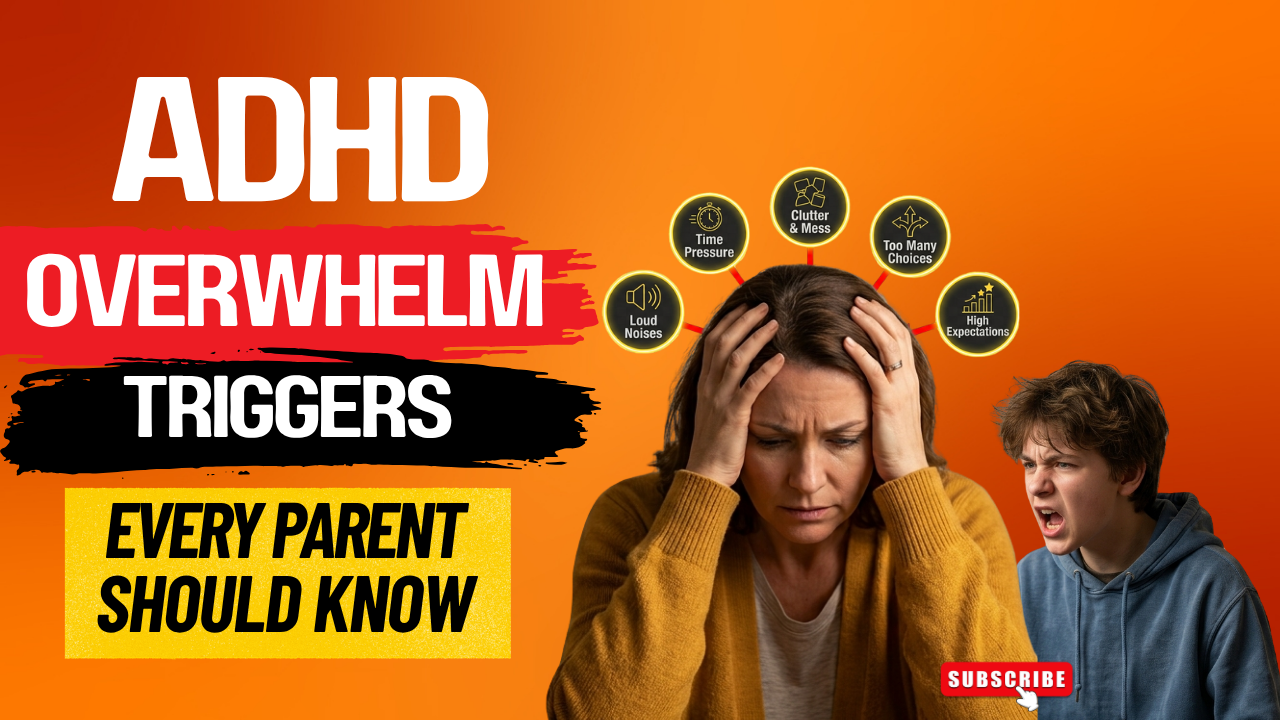
ADHD overwhelm triggers every parent should know
Jul 25, 2026Parenting a child with ADHD can feel unpredictable. One moment your child is calm and engaged, and the next they're frustrated, anxious, or completely shut down. Often, these moments aren't caused by defiance or laziness—they're the result of ADHD overwhelm.
When the ADHD brain becomes overloaded, even simple situations can feel impossible to manage. The good news is that understanding what causes overwhelm allows you to make small changes that have a big impact on your child's confidence, emotional regulation, and daily success.
As an ADHD parent coach—and someone who also has ADHD—I understand these challenges from both perspectives. Over the years, I've learned that it's often the little things parents do differently that create the biggest improvements.
Here are three common triggers of ADHD overwhelm and what you can do instead.
Understanding the Causes of ADHD Overwhelm
ADHD overwhelm often starts with interrupted focus
One of the biggest misconceptions about ADHD is that children can't focus.
The reality is that many children with ADHD can focus extremely well. The challenge isn't focusing—it's getting into that focused state in the first place. Reaching that level of concentration often requires a significant amount of mental effort.
Imagine your child has finally settled into their homework after struggling to get started. They're working through a math problem when you ask, "Do you want to go to Grandma's after school tomorrow?"
To you, it's a simple question.
To your child, their brain has now switched from math to tomorrow's plans. They may begin thinking about Grandma's house, what they'll do there, what time they'll leave, or whether they'll see their cousins. By the time they return to their homework, they've lost their momentum and have to rebuild their focus all over again.
This is why interruptions often lead to frustration—not because your child doesn't want to answer you, but because restarting takes so much mental energy.
What you can do instead
Before interrupting, ask yourself:
- Can this wait?
- Is it urgent?
- Could I ask after they're finished?
Protecting your child's focus gives them the best chance to complete tasks successfully while reducing unnecessary stress.
If your child struggles to stay focused during homework or schoolwork, you may also enjoy reading ADHD Focus Tips to Help Teens Stay on Track with Schoolwork.
Learning more about Executive Function and ADHD can also help explain why interruptions feel so disruptive for the ADHD brain.
Clear Communication Prevents Unnecessary Anxiety
Reduce anxiety before ADHD overwhelm takes over
Have you ever told your child:
"We need to talk later."
Most parents don't think twice about saying it.
But for someone with ADHD, those six words can trigger hours of anxiety.
Their mind immediately starts asking questions like:
- What did I do wrong?
- Am I in trouble?
- Did I forget something?
- Is someone upset with me?
Instead of focusing on school, chores, or playing with friends, they're mentally replaying every conversation they've had that day.
I know this feeling well. Even now, if someone says, "Ivan, we need to talk," my brain immediately assumes I've made a mistake—even when the conversation ends up being completely positive.
What you can do instead
Whenever possible, give your child context.
Instead of saying:
"We need to talk later."
Try saying:
"After dinner, I'd like to talk about our weekend plans."
Or:
"When you're finished, can you help me decide where we'd like to eat tonight?"
Those few extra words remove uncertainty and help your child feel emotionally safe.
If emotional outbursts are also a challenge in your home, my Parent's Guide to ADHD Regulating Emotions Without Yelling shares practical strategies that work alongside clear communication.
Understanding Emotional Regulation in Children with ADHD can also help explain why uncertainty creates so much stress.
Predictable Routines Reduce Daily Stress
Create routines that reduce overwhelm
Children with ADHD often do best when they know what's coming next.
Predictable routines reduce the mental effort required to transition between activities. When plans suddenly change, however, the ADHD brain has to quickly throw away one mental plan and create another. That rapid shift can feel exhausting.
In our family, we sit down every Sunday and review the week ahead. We talk about appointments, activities, school events, and anything different from our normal schedule.
Personally, I rely heavily on calendars, reminders, and daily task lists. Knowing what's coming next frees up mental energy and makes my day feel much more manageable.
What you can do instead
Whenever possible:
- Review the day's schedule together.
- Give advance notice before transitions.
- Explain changes before they happen.
- Tell your child exactly what will happen next.
For example:
"Instead of going to the park because it's raining, we'll head home, eat lunch, and then choose a fun indoor activity together."
Giving your child a clear roadmap reduces uncertainty and makes transitions much easier.
If you'd like more ideas for building routines that reduce stress at home, read How to Beat ADHD Overwhelm and Create a Peaceful Routine.
Many ADHD specialists recommend Daily Routines for Children with ADHD because consistent structure helps reduce cognitive overload and improves emotional regulation.
Small Changes Create Lasting Results
Supporting a child with ADHD isn't about creating a perfect home.
It's about understanding how their brain experiences the world and making thoughtful adjustments that help them succeed.
When you protect their focus, communicate with clarity, and create predictable routines, you're helping your child feel understood instead of overwhelmed.
Those small changes may seem simple, but over time they build confidence, strengthen your relationship, and help your child develop skills they'll use for life.
Ready for More Support?
Every child with ADHD is unique, and every family faces different challenges.
If you're looking for practical, personalized strategies that fit your family, I'd love to help.
Schedule a 1-on-1 call with me to discuss your biggest parenting challenges, get answers to your questions, and create a personalized plan that brings more calm, confidence, and connection to your home.
Connect with me and find out how my Emotionally Empowered Parent Coaching Program can help you to success and calm in your parenting of teens with ADHD
Stay connected with news and updates!
Join our mailing list to receive the latest news and updates from our team.
Don't worry, your information will not be shared.
We hate SPAM. We will never sell your information, for any reason.
