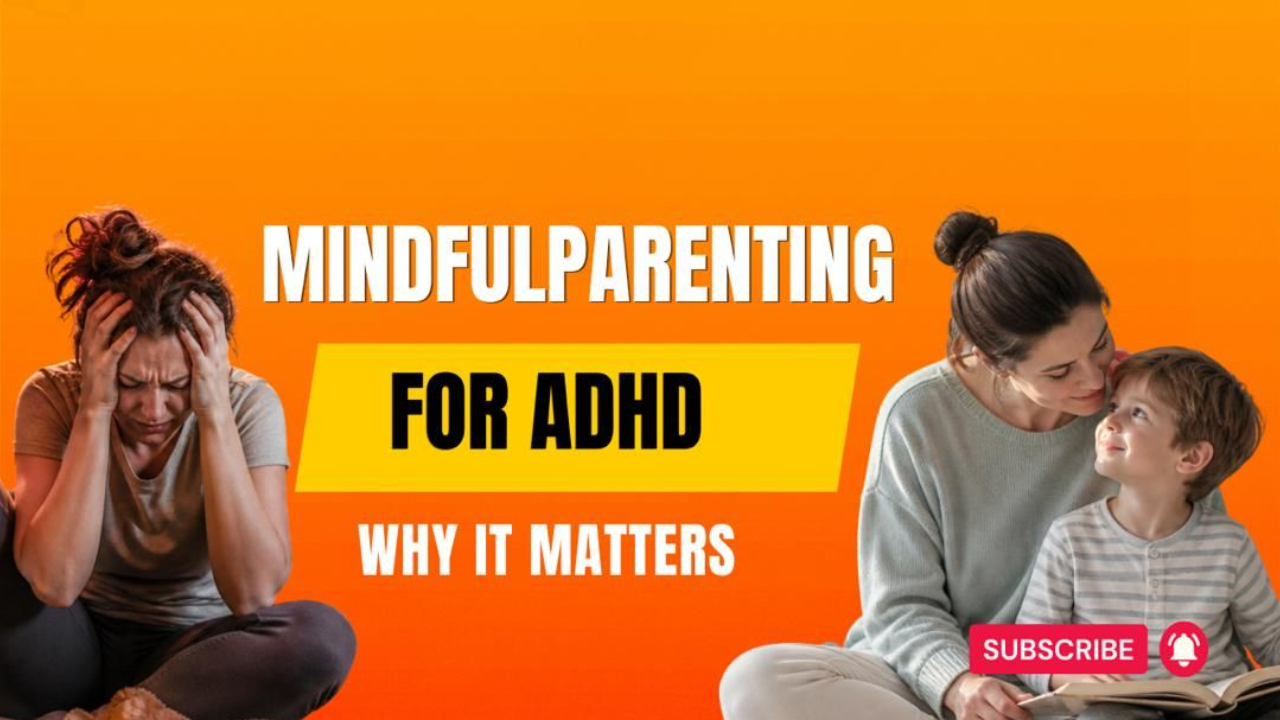
Mindful parenting for ADHD: why it matters
May 06, 2026If you’re parenting a child with ADHD, there’s a good chance you’ve asked yourself questions like:
How do I get my child to listen?
Why does everything turn into a battle?
Why do I feel exhausted, reactive, and overwhelmed all the time?
Most parents come looking for behavior strategies.
But mindful parenting for ADHD is not just about managing behavior.
It’s about understanding the nervous system — your child’s and your own.
I’m Ivan, a parent coach helping families raise ADHD kids with more connection, clarity, and peace. And what I’ve discovered is this:
The biggest breakthroughs don’t happen when you “fix” your child.
They happen when you learn to regulate yourself, understand your triggers, and create emotional safety inside your home.
This is where mindful parenting changes everything.
Why Emotional Regulation Matters in ADHD Parenting
Mindful parenting for ADHD starts with nervous system awareness
Most parenting advice focuses on behavior:
- Stop the meltdowns
- Improve focus
- Get them to follow instructions
But ADHD is deeply connected to nervous system regulation.
When your child becomes dysregulated, your own stress response often activates automatically. You react before you think. The yelling, frustration, shutdown, or control patterns begin.
Children with ADHD co-regulate through the adults around them.
Your calm becomes their safety.
Mindful parenting starts with noticing your own internal state before trying to control theirs.
Ask yourself:
- What happens inside me when my child struggles?
- What emotions rise first?
- Am I responding intentionally or reacting automatically?
Awareness creates choice.
And choice changes families.
You may also enjoy reading : ADHD Emotional Regulation Strategies for Teens to better understand how emotional overwhelm affects behavior at home.
How mindfulness improves emotional regulation in parents.
Understanding your child through mindful parenting for ADHD
ADHD behaviors can feel deeply personal.
The forgotten homework.
The interruptions.
The emotional explosions.
The refusal to cooperate.
It can feel disrespectful or defiant.
But mindful parenting reframes behavior as information, not attack.
Often, your child’s brain is overloaded. Executive functioning gets jammed. Their nervous system becomes flooded, and behavior becomes the outward signal of an internal struggle they don’t yet know how to manage.
When you shift from:
“Why are they doing this to me?”
to:
“What is this behavior trying to communicate?”
your parenting changes instantly.
Connection replaces conflict.
Curiosity replaces criticism.
You can expand on this further with : Executive functioning challenges in children with ADHD.
10 Mindful Parenting Shifts That Transform ADHD Family Life
Parenting triggers reveal hidden emotional patterns
One of the hardest truths in parenting is this:
Sometimes our child activates wounds we never realized we were carrying.
Maybe you were raised to be compliant.
Maybe mistakes were punished harshly.
Maybe emotional expression felt unsafe growing up.
So when your child is chaotic, emotional, resistant, or impulsive, it touches parts of yourself you had to suppress to survive.
This is why ADHD parenting can feel so emotionally intense.
Your child is not just challenging your patience.
They may be challenging your conditioning.
Healing your reactions transforms the parent-child dynamic far more than control ever will.
Emotional awareness strengthens mindful parenting for ADHD
Parenting an ADHD child can feel relentless.
You ask five times.
Nothing happens.
Your stress rises.
You explode.
These patterns become automatic because the nervous system is trying to protect itself.
Mindfulness interrupts that cycle.
It creates a pause between stimulus and response.
And inside that pause are options.
Instead of reacting instantly, you begin responding intentionally.
One grounded moment can prevent hours of conflict.
You don’t need to become perfectly calm.
You just need enough awareness to choose differently more often.
That is real progress.
If yelling and reactivity are becoming common patterns, you may want to explore : Dealing with ADHD Child Behaviors Without Yelling.
ADHD kids need connection before correction
Traditional parenting often prioritizes compliance:
“Do what I said because I said so.”
But ADHD brains do not respond well to shame, force, or emotional disconnection.
Especially when dysregulated.
Before your child can process correction, they need emotional safety.
They need to feel:
- Seen
- Understood
- Connected
Mindful parenting starts with attunement.
When connection comes first, trust grows.
When trust grows, cooperation becomes easier.
Peace in the home is built relationally, not forcefully.
This section pairs well with : The role of co-regulation in child emotional development.
Perfectionism creates pressure instead of growth
Many parents unknowingly parent from fear.
Fear of failure.
Fear of judgment.
Fear of losing control.
Fear that their child’s struggles reflect something about them.
So they push harder.
Higher expectations.
More criticism.
More pressure to “get it right.”
But ADHD rarely thrives under perfectionism.
Growth happens through consistency, patience, flexibility, and connection.
Not control.
Your child does not need a perfect parent.
They need a regulated, self-aware, emotionally safe one.
Emotional regulation matters more than parenting hacks
Charts help.
Routines help.
Reward systems help.
But no strategy works consistently in an emotionally chaotic environment.
Children learn regulation by watching it modeled.
Your calm teaches more than your lectures ever will.
This is why many parenting systems fail — they focus only on behavior without addressing emotional energy underneath the behavior.
The deeper work is internal.
When you regulate yourself, your home environment changes.
And when the environment changes, your child responds differently.
ADHD parenting requires flexibility and responsiveness
What works for one child may completely fail for another.
Rigid parenting often creates unnecessary power struggles because ADHD children need adaptability, not constant force.
Mindful parenting means learning to see the child in front of you clearly — not the version you expected them to be.
Flexibility does not mean weakness.
It means responsiveness.
And responsiveness creates growth.
For more practical tools, see: Parenting Strategies for ADHD That Bring Peace and Cooperation.
Healing yourself improves parenting outcomes
This may be the most important shift of all.
Many parents spend years searching for strategies to change their child.
But the greatest transformation often comes through personal growth.
When you become:
- more self-aware
- more emotionally regulated
- more compassionate
- more intentional
your child experiences a completely different relational environment.
Children respond more deeply to emotional safety than constant correction.
Parenting can become a pathway for your own healing too.
Mindful parenting becomes a long-term family legacy
This work goes far beyond daily behavior struggles.
You are shaping:
- how your child sees themselves
- how they experience relationships
- how safe they feel emotionally
- how they regulate stress
- how they parent one day
Every healed pattern you stop repeating changes your family story.
Mindful parenting is not about becoming endlessly patient or perfectly calm.
It’s about becoming aware enough to break cycles.
Regulated enough to lead with intention.
And courageous enough to face the parts of yourself your child brings to light.
Which Parenting Shift Resonated With You Most?
Take a moment and reflect:
- Which of these 10 shifts challenged you the most?
- Which one felt deeply true for your current parenting journey?
- Where do you feel called to grow next?
Because parenting an ADHD child is not just about helping them grow.
It’s also an invitation for you to grow too
Connect with me and find out how my Emotionally Empowered Parent Coaching Program can help you to success and calm in your parenting of teens with ADHD
Stay connected with news and updates!
Join our mailing list to receive the latest news and updates from our team.
Don't worry, your information will not be shared.
We hate SPAM. We will never sell your information, for any reason.
