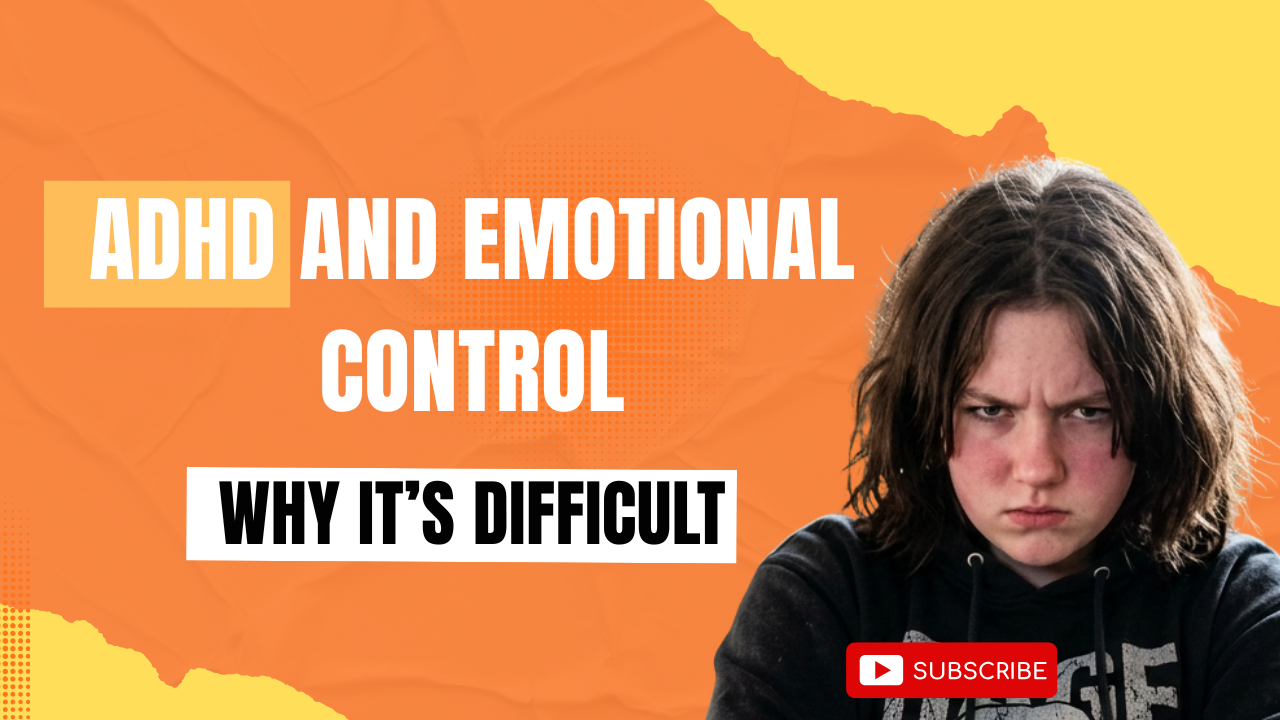
ADHD and emotional control- why it’sdifficult
Apr 14, 2026If your child has ever completely melted down over something small, you’ve probably found yourself thinking:
“This can’t just be about that…”
And you’re right.
Because it’s not.
It’s Not About the Moment
Picture this:
Your child gets through the morning. They wake up, get dressed, brush their teeth, eat breakfast, and pack their bag.
They’re doing everything they’re supposed to do.
They even built something they’re proud of—a Lego creation they can’t wait to show.
Then right before leaving… it drops.
It breaks.
And suddenly, everything explodes.
What You See vs. What’s Actually Happening
ADHD and emotional control challenges start beneath the surface
From the outside, it looks like an overreaction.
But internally, your child has been working hard the entire time.
Every step of that “simple” routine required focus, transitions, self-control, and mental effort.
For a child with ADHD, that’s not light work.
That’s a build-up.
This is backed by research on emotional regulation in children with ADHD, which shows how much effort is happening beneath the surface.
You can also explore ADHD Emotional Regulation Strategies for your teens love language to better support mornings like this.
The Hidden Build-Up
What builds over time affects ADHD and emotional control
By the time they reach the door, their system may already be full.
Think of it like a funnel.
Everything they’re doing, thinking, and processing—it’s all trying to move through.
But instead of flowing freely, it starts to pile up.
So when something unexpected happens—even something small—it’s not just one more thing.
It’s the thing that tips everything over.
This connects closely with executive function and cognitive overload in kids, which explains why small disruptions feel so big.
You might also find How to Manage Comorbid Anxiety and ADHD at Home helpful.
The Meltdown Is the Overflow
Why meltdowns happen with ADHD and emotional control
That reaction you see isn’t about the Lego.
It’s the overflow of everything that came before it—the pressure, the effort, and the overwhelm all releasing at once.
This pattern is also explained in ADHD emotional dysregulation, showing why reactions can feel sudden and intense.
For more insight, read Parent Behavior Therapy ADHD: A Beginner’s Guide
This Changes How You Respond
Instead of thinking:
“Why are they overreacting?”
You start asking:
“What has been building up for them?”
And from that place, your response becomes calmer, clearer, and more grounded.
The Power of a Pause
You don’t have to fix everything in the moment.
At a more grounded level of awareness—what sits around acceptance and neutrality on the scale—the goal is simple:
See clearly.
Pause.
Respond instead of react.
That pause alone can begin to release the pressure your child is feeling.
You’re Not Failing—You’re Learning
These moments don’t mean you’re doing something wrong.
They mean there’s a system underneath your child’s behavior that’s asking to be understood.
And when you understand it, everything starts to shift.
If You Need Support
If this is something you’re navigating often, you don’t have to figure it out alone.
Sometimes one conversation can unlock what feels stuck.
And from there, things get lighter—for you and for your child.
Schedule a call with me to get calm and clarity
Your child’s meltdown isn’t random.
It’s communication.
And when you learn how to read it, you step into a calmer, more confident version of yourself as a parent—and you give your child the support they actually need.
Connect with me and find out how my Emotionally Empowered Parent Coaching Program can help you to success and calm in your parenting of teens with ADHD
Stay connected with news and updates!
Join our mailing list to receive the latest news and updates from our team.
Don't worry, your information will not be shared.
We hate SPAM. We will never sell your information, for any reason.
